From Data to Design: How Smarter Menus Will Transform 2026 Restaurants
The restaurant industry is rapidly evolving, and menus are no longer just lists of dishes. In 2026, smarter, data-driven menus are becoming essential tools for restaurants to engage customers, increase sales, and streamline operations. By combining insights from customer behavior with innovative design, restaurants can create menus that are not only visually appealing but also highly effective in guiding choices.
AI, automation, and immersive technologies are reshaping menus with digital, interactive, and personalized experiences that meet modern diner expectations and boost profitability. Understanding these trends and implementing smarter menus will be key for any restaurant aiming to stay competitive and succeed in the rapidly changing dining landscape.
How Data Intelligence Is Transforming Customer Menu Experiences in 2026
In 2026, restaurants are leveraging data to make menus smarter, more personalised, and responsive to customer preferences. By analysing behaviour, predicting demand, and adjusting in real time, operators can improve satisfaction, reduce waste, and boost profitability. The sections below explore the key strategies driving this transformation.
Personalised Menu Recommendations with AI
AI-powered menus analyse customer preferences to provide tailored options, ensuring every guest sees items that suit their tastes and dietary needs. The system detects customer preferences, including dietary restrictions, allergies, and favorite cuisines, highlighting relevant dishes to enhance satisfaction while suggesting personalized add-ons or combos to boost sales.
Predictive Demand Planning to Reduce Waste
Predictive demand planning uses analytics to help restaurants forecast customer demand, ensuring the right amount of food is prepared and waste is minimized. By analyzing trends, weather, and local events, it predicts high-demand dishes, optimizes inventory to prevent overstock or shortages, and guides staffing and prep schedules during peak periods.
Heat-Mapping Customer Choices for Better Layouts
By tracking how customers browse the menu, restaurants can identify which items attract attention and optimize their placement. This analysis highlights popular or high-margin dishes, reveals items that are often overlooked, and improves menu layout and navigation to enhance customer experience and boost sales.
Real-Time Menu Adjustments Across Platforms
Menus can be updated instantly across digital platforms, ensuring customers always see accurate availability and pricing. This includes synchronizing changes across apps, digital boards, and POS systems, quickly responding to sold-out items, supplier cost fluctuations, or special promotions, while maintaining a seamless customer experience and minimizing lost sales.
Understanding Customer Behaviour for Smarter Decisions
Analyzing patterns in customer orders enables restaurants to refine offerings and deliver more personalized experiences. By tracking spending habits, peak ordering times, popular add-ons, and preferences for dine-in, takeaway, or delivery, restaurants can implement targeted promotions and adjust menus in line with customer trends.
By leveraging data intelligence, restaurants can create menus that are dynamic, personalised, and aligned with customer needs. These insights help improve satisfaction, reduce waste, and drive profitability, giving operators a competitive edge
How to Design Smarter Menus That Increase Engagement and Profitability
Designing menus strategically can boost customer engagement and drive higher profits. By combining layout, content, and real-time insights, restaurants can guide choices, promote high-margin items, and enhance the overall dining experience.
-
Highlight Bestsellers: Make popular or profitable dishes stand out using visual cues, icons, or positioning. This encourages customers to choose items that benefit both them and your business.
-
Real-Time Updates: Adjust menus instantly when items sell out, prices change, or promotions run. Real-time updates prevent disappointment and maintain customer trust.
-
Readable Layout: Organize the menu with clear sections, headings, and readable fonts. A well-structured layout makes it easier for customers to browse and make faster decisions.
-
Cross-Sell Strategies: Suggest complementary dishes, sides, or drinks at the right moment. This increases the average spend and enhances the dining experience.
-
Customer-Focused: Personalize menus based on dietary preferences, past orders, or local tastes. Tailored recommendations create a sense of care and encourage repeat visits.
Explore mastering inventory management: essential tips every commercial kitchen technician should know for efficient stock control, waste reduction, and smooth kitchen operations
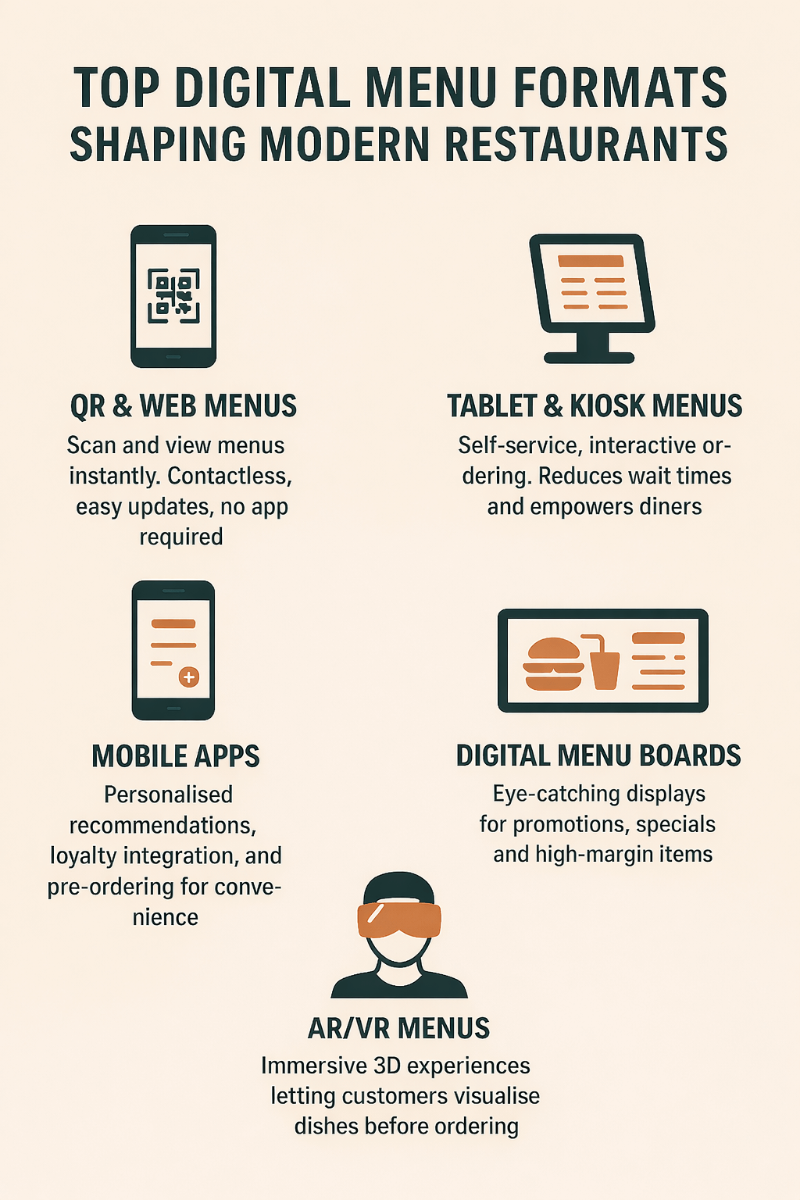
Choosing the Best Menu Formats for a Digital Dining Experience in 2026
Digital menus are transforming how customers browse and order, offering convenience, interactivity, and real-time updates. Choosing the right format helps restaurants engage guests, streamline operations, and increase sales.
Top Food and Dining Trends Shaping Menus in 2026
As UK diners become more informed and selective, menus must adapt to changing tastes, health priorities, and expectations for transparency. In 2026, these trends will shape both menu design and offerings.
Health & Wellness
Modern diners prioritize nutrition and overall well-being. Restaurants should offer low-calorie, high-protein, and functional dishes while providing clear nutritional information. Functional ingredients like probiotics, collagen, and adaptogens are increasingly sought after, and transparency in menu content is now expected.
Personalization & Convenience
Customers expect menus that adapt to their individual preferences and lifestyles. Customizable dishes, build-your-own formats, and personalized recommendations based on dietary needs or past orders enhance satisfaction. Clear dietary icons (vegan, gluten-free, halal) and streamlined ordering make the experience seamless and efficient.
Value & Transparency
With rising living costs, diners demand honesty and clarity. Transparent pricing, clear portion descriptions, and ethical sourcing foster trust and loyalty. Reasonable pricing for add-ons or upgrades ensures diners feel confident in their choices.
Exciting New Flavours
Consumers are exploring bold, innovative tastes alongside familiar favorites. Menus that incorporate international spices, fusion combinations, seasonal ingredients, and limited-time specials can attract adventurous diners while balancing comfort classics, encouraging repeat visits, and creating excitement at every meal.
Check out the ultimate guide to choosing commercial fryer baskets for high-performance restaurant frying
Practical Steps for Building Smarter Menus in 2026
A clear, data-driven action plan helps restaurants optimise menu performance, improve customer experience, and maximise profitability in 2026.
|
Strategic Focus Area |
What Restaurants Should Do |
Key Actions |
|
Conduct a Data Audit |
Understand all data touchpoints and quality |
Map customer, sales, and operational data sources |
|
Evaluate accuracy, completeness, and usability |
||
|
Define KPIs (conversion, item profitability, upsell rate, dwell time) |
||
|
Build Strong Analytics Capabilities |
Convert raw data into practical insights |
Implement analytics tools and dashboards |
|
Train teams on data interpretation and application |
||
|
Establish recurring data review workflows |
||
|
Apply Design Thinking to Menu Development |
Create menus that enhance engagement and sales |
Work with UX, visual design, or behavioral experts |
|
Prototype layouts, wording, placements, interactions |
||
|
Use A/B testing to validate what increases conversions |
||
|
Integrate Menus Across All Digital Touchpoints |
Ensure consistent, real-time menu experiences |
Sync menus with POS, website, mobile app, QR, and delivery apps |
|
Maintain consistent pricing, availability, and branding |
||
|
Enable real-time updates to reduce friction and errors |
||
|
Continuously Monitor, Iterate, and Improve |
Keep menus relevant, profitable, and aligned with customer behavior |
Adjust placement, pricing, and descriptions using real-time data |
|
Collect feedback via surveys, heatmaps, and behavior analytics |
||
|
Balance experimentation with brand consistency |
Conclusion: Smarter Menus as the New Strategic Advantage for 2026 Restaurants
In 2026, smarter menus are transforming how restaurants engage customers, manage costs, and drive profitability. By leveraging data intelligence, AI-powered recommendations, and dynamic digital formats, restaurants can deliver personalised and seamless experiences, optimise inventory, reduce waste, and adapt quickly to changing customer expectations.
Key Takeaways
-
Smarter menus use data, AI, and analytics to personalise the dining experience.
-
Real-time updates ensure accurate pricing, availability, and seamless customer journeys.
-
Strategic menu design improves engagement, conversion, and profitability.
-
Digital formats like QR menus, kiosks, and AR/VR enhance interactivity and convenience.
-
Understanding food trends helps restaurants align offerings with 2026 consumer expectations.
-
Continuous menu optimisation drives long-term competitiveness and operational efficiency.
Design-focused strategies and behavioural insights are turning menus into powerful tools for business success. Well-organized layouts, easy-to-follow navigation, and real-time updates help guide customers toward profitable choices while delivering a seamless dining experience. In a competitive market, restaurants that implement smart, responsive, and insight-driven menus will stand out.
Ensure your commercial kitchen operates at its best with PartsFe UK, offering high-quality parts for dishwashers, fryers, and griddles & grills from trusted brands like Vulcanhart, Garland, Prince Castle, and more, to keep your equipment running efficiently
FAQs
Will AI replace human workers in restaurants?
AI supports staff by handling repetitive tasks, but humans remain essential for service, creativity, and problem-solving.
How can small restaurants implement AI without a huge budget?
Small restaurants can use affordable AI tools like digital ordering, predictive analytics, and automated recommendations to improve efficiency without large investments.
Can menus automatically update calorie information?
Yes. Restaurants with more than 250 employees in the UK are legally required to display calorie information on menus. Smart menu platforms can automatically sync calorie data, ensure accuracy, and include the mandated statement that adults need around 2,000 kcal per day.