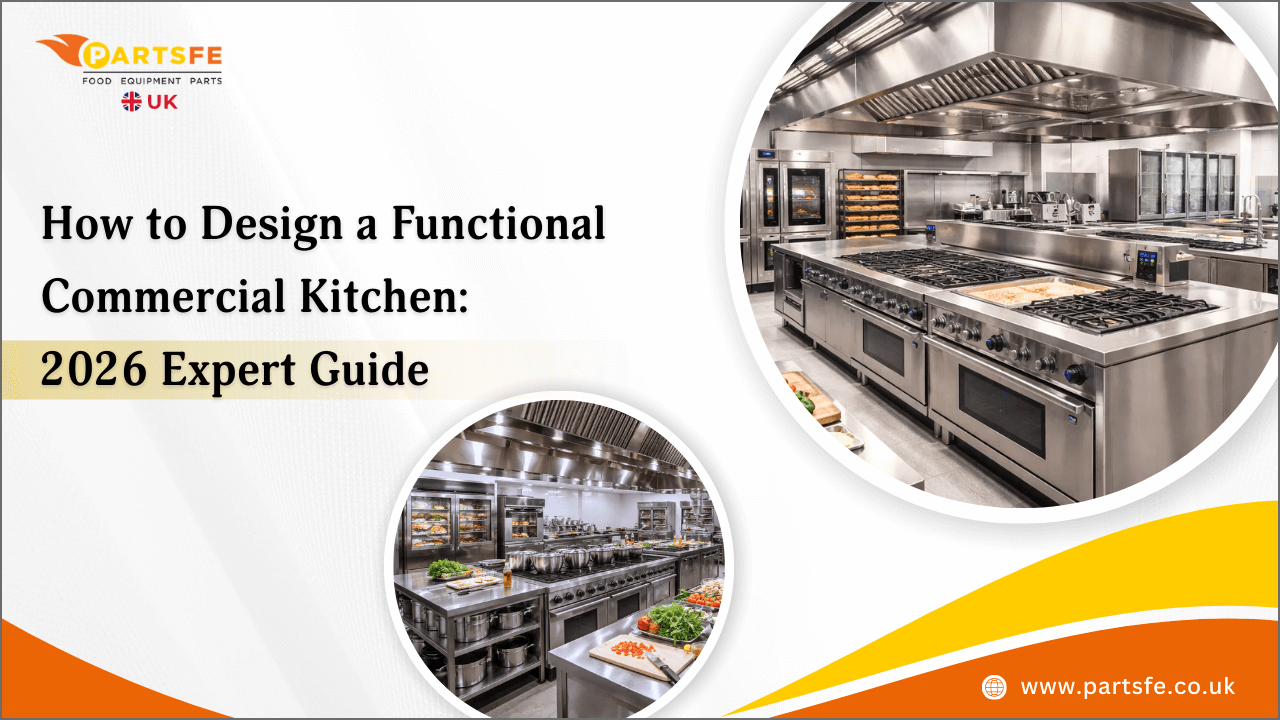
How to Design a Functional Commercial Kitchen: 2026 Expert Guide
Designing a functional commercial kitchen in 2026 requires more than just installing appliances and workstations. For UK restaurants and catering businesses, the kitchen must balance operational efficiency, regulatory compliance, sustainability, and staff productivity. A well-planned kitchen directly impacts service speed, food safety, labour costs, and long-term maintenance.
This guide provides expert insights on layout planning, equipment selection, compliance requirements, and sustainability-focused design tailored specifically for commercial kitchens.
Planning Your Kitchen Space and Layout for Maximum Productivity
Efficient kitchen design starts with smart space planning to optimise workflow, safety, and hygiene. Below are the essential functional zones and layout considerations for a productive commercial kitchen:
Define Functional Zones for Efficient Workflow: Professional commercial kitchen design relies on zoning to streamline operations and maintain hygiene standards. The main functional zones in catering kitchens typically include:
-
Delivery and Receiving Area: This is the entry point where all ingredients and supplies are checked for quality, temperature, and quantity before being moved into storage to maintain hygiene and stock control.
-
Storage Areas: These include separate dry, chilled, and frozen sections to keep ingredients at safe temperatures and prevent spoilage or cross-contamination.
-
Preparation Stations: Dedicated spaces where staff wash, cut, marinate, and assemble ingredients in an organised and hygienic manner before cooking.
-
Cooking Line: The main production area is equipped with ovens, fryers, grills, and stoves, where meals are cooked efficiently during service.
-
Service and Plating Area: The section where finished dishes are assembled, plated, and passed to the front-of-house team for serving.
-
Dishwashing and Waste Management: A separate zone for cleaning utensils and handling waste, designed to maintain cleanliness and reduce contamination risks across the kitchen.
Choose the Right Kitchen Layout: The layout of your commercial kitchen directly affects productivity. Common catering kitchen layouts include:
-
Assembly Line Layout: Best for fast-service or single-menu restaurants, allowing a streamlined flow from prep to cooking to service.
-
Zone Layout: Ideal for large or multi-cuisine kitchens, separating preparation, cooking, and plating areas to improve organisation and hygiene.
-
Island Layout: Features centralised cooking stations that promote communication and teamwork among chefs.
Circulation and Space Planning Standards: Efficient circulation is vital to prevent congestion and ensure safety during busy service periods. UK commercial kitchen standards recommend at least 1.2 metres between workstations and up to 2 metres of clearance around heavy equipment like fryers and kettles. Separate access routes for staff, deliveries, and waste removal further support smooth operations and compliance with health and safety guidelines.
Lighting, Ventilation, and Ergonomics: Good lighting, proper ventilation, and ergonomic design keep kitchens safe and efficient. LED task lighting and natural light improve visibility, while canopy hoods remove heat and grease. Worktops at 910 to 920 mm, anti-fatigue flooring, and accessible storage reduce strain and boost staff productivity.
Choosing the Right Equipment for Your Kitchen Scale and Needs
Selecting the right commercial kitchen equipment ensures efficiency, safety, and long-term reliability. Your choice should match your menu complexity, daily output, and available space. Refer to the table below for recommended equipment by kitchen size:
|
Equipment |
Small Operation (10–50 meals/day) |
Medium Operation (50–200 meals/day) |
Large Operation (200+ meals/day) |
|
Cooking |
Compact induction hob, small combi oven, single fryer |
Full-size range, multiple combi ovens, grills |
Heavy-duty ranges, multiple combi ovens, tilt kettles |
|
Refrigeration |
Under-counter fridge/freezer |
Upright fridge & freezer units |
Walk-in cold rooms and blast chillers |
|
Preparation |
Basic prep benches and small mixers |
Industrial mixers, food processors |
Multiple prep stations and cutting tables |
|
Dishwashing |
Undercounter dishwasher, 1 to 2 sinks |
Pass-through dishwasher, triple sink setup |
High-capacity dishwashers with a pot wash area |
|
Ventilation |
Single canopy hood |
Multi-hood extraction system |
High-capacity canopies with fire-rated ducting |
Find out why smart kitchen equipment is the ultimate key to restaurant success as it boosts efficiency, reduces waste, and ensures consistent quality
Ensuring Compliance with UK Food Safety and Building Regulations
Commercial kitchens in the UK must adhere to strict health, safety, hygiene, and building standards to protect staff, customers, and property. Below are the key compliance areas and requirements to maintain a safe and legally compliant kitchen:
Health & Safety Standards: Commercial kitchens must provide a safe working environment for staff, including proper ventilation, lighting, and drainage, along with safely installed gas appliances.
Key Compliance Points:
-
Kitchens must meet the Workplace (Health, Safety & Welfare) Regulations 1992 and the Health and Safety at Work Act 1974.
-
Gas ovens and appliances must have flues or interlocked extraction systems to prevent harmful gas backflow (Gas Safety Regulations 1998).
Food Hygiene & Building Standards: Kitchens must maintain high hygiene levels to prevent contamination and comply with UK building regulations. Surfaces, sinks, and drainage systems must meet strict standards.
Key Compliance Points:
-
All surfaces, including floors, walls, ceilings, and equipment, must be smooth, durable, and easy to clean (as per Food Standards Agency guidance).
-
Separate sinks are required for food preparation and washing utensils, along with hand-wash stations providing hot and cold water.
-
Wastewater systems must have grease traps to prevent fat build-up, and solid waste or cooking oils must be disposed of safely to avoid blockages and fire hazards.
Fire Safety & Building Codes: Fire safety is critical in commercial kitchens. Formal risk assessments and protective measures help prevent accidents and comply with building regulations.
Key Compliance Points:
-
Conduct a formal fire risk assessment under the Regulatory Reform (Fire Safety) Order 2005.
-
Equip the kitchen with appropriate fire extinguishers (CO₂, foam, Class-F), fire blankets, and, where required, hood suppression systems.
-
Install fire-rated barriers between the kitchen and dining areas, and ensure wide exits and separate routes for staff and deliveries.
Optimising Kitchen Workflow, Staff Efficiency, and Sustainability
A highly functional commercial kitchen balances smooth workflow, staff productivity, and sustainable practices to reduce costs, improve service quality, and support a greener operation. Below are key strategies to optimise workflow, enhance efficiency, and implement sustainable practices:
Streamlining Workflow: An efficient workflow is crucial in commercial kitchens, where time, space, and staff coordination directly impact service quality. Consider the following strategies:
-
Sequential Task Design: Arrange prep, cooking, plating, and service stations in a logical sequence to reduce unnecessary movement. For example, position the cold storage near the prep areas, and place the plating section adjacent to the cooking line.
-
Minimising Cross-Traffic: Avoid overlapping paths between chefs, servers, and cleaning staff. Use separate access routes for deliveries and waste removal to prevent congestion.
-
Standardised Processes: Implement consistent preparation methods and plating routines. Clear SOPs (Standard Operating Procedures) improve speed and reduce errors, especially during peak hours.
Enhancing Staff Productivity: Staff efficiency is as important as workflow design. Ergonomic design, training, and tools can reduce fatigue and improve output:
-
Ergonomic Workstations: Height-adjustable prep tables, anti-fatigue mats, and accessible storage prevent strain and support long shifts. UK regulations recommend worktops at 910 to 920 mm for average height, adjustable where possible.
-
Skill-Based Task Allocation: Assign tasks based on staff expertise to optimise speed and accuracy. Cross-training ensures coverage and flexibility during busy periods.
-
Digital Tools & Kitchen Management Systems: Use software to manage orders, inventory, and prep schedules. Real-time dashboards reduce miscommunication and enable proactive problem-solving.
Sustainability Practices: Sustainability is increasingly vital for UK catering businesses, benefiting both the environment and operational costs. Key practices include:
-
Energy-Efficient Appliances: Invest in energy-rated ovens, induction hobs, and LED lighting to reduce electricity consumption. Combi ovens with smart controls and timers can significantly cut energy use.
-
Water Conservation: Install low-flow pre-rinse taps and automatic shut-off systems in dishwashing areas to minimise water waste. Regular maintenance prevents leaks and improves efficiency.
-
Waste Management & Recycling: Implement clear segregation for organic waste, recyclable materials, and cooking oils. Composting food waste or using it for biofuel can reduce disposal costs.
-
Sustainable Sourcing: Choose suppliers who prioritise local and seasonal produce to reduce carbon footprint. Monitor ingredient usage to prevent over-ordering and food waste.
Check out how to plan a commercial kitchen that meets every unique business need to boost productivity and reduce costs
Summary: Key Takeaways for Designing a Functional Commercial Kitchen
Designing a functional commercial kitchen in 2026 requires careful planning, the right equipment, compliance with UK regulations, and sustainable, efficient workflows. A well-structured kitchen enhances productivity, reduces costs, and ensures food safety while supporting staff performance.
Key Takeaways:
-
Plan your kitchen layout with clear functional zones to streamline workflow and minimise cross-contamination.
-
Choose equipment based on kitchen size, menu complexity, and daily output to maximise efficiency.
-
Comply with UK health, safety, food hygiene, fire, and building regulations.
-
Optimise staff productivity with ergonomic workstations, proper training, and task allocation.
-
Implement sustainable practices, including energy-efficient appliances, water conservation, and waste management.
-
Regularly review workflow, staff performance, and kitchen operations for continuous improvement.
Shop now at PartsFe UK to keep your commercial kitchen equipment parts performing at their best. We offer a wide range of dishwasher parts, fryer parts, ice machine parts, oven parts, coffee machine parts, grill & griddle parts from trusted brands like Hobart, Vulcan Hart, and Cecilware for efficient kitchen operation.
References:
https://www.ncass.org.uk/training/food-hygiene
https://cebasolutions.co.uk/commercial-kitchen-requirements
https://www.thecaterer.com/news/news/premises-and-equipment
FAQs
How often should staff receive hygiene and safety training?
Staff must complete hygiene and safety training before starting work and annually, with additional sessions for high-risk roles to maintain safety and compliance.
What is the best flooring to put in a commercial kitchen?
The best flooring is strong, easy to clean, and slip-resistant, such as quarry tiles or sealed vinyl, to keep the kitchen safe and hygienic.
What is the legal requirement for cold food storage in the UK?
In the UK, chilled foods must be stored at 5 °C or below, and frozen foods at −18 °C or lower, with temperatures regularly monitored to ensure compliance with food hygiene regulations.
|
Disclaimer: This content is for general information only. Consult qualified professionals or equipment manufacturers before making decisions about kitchen design, equipment, or UK compliance. |