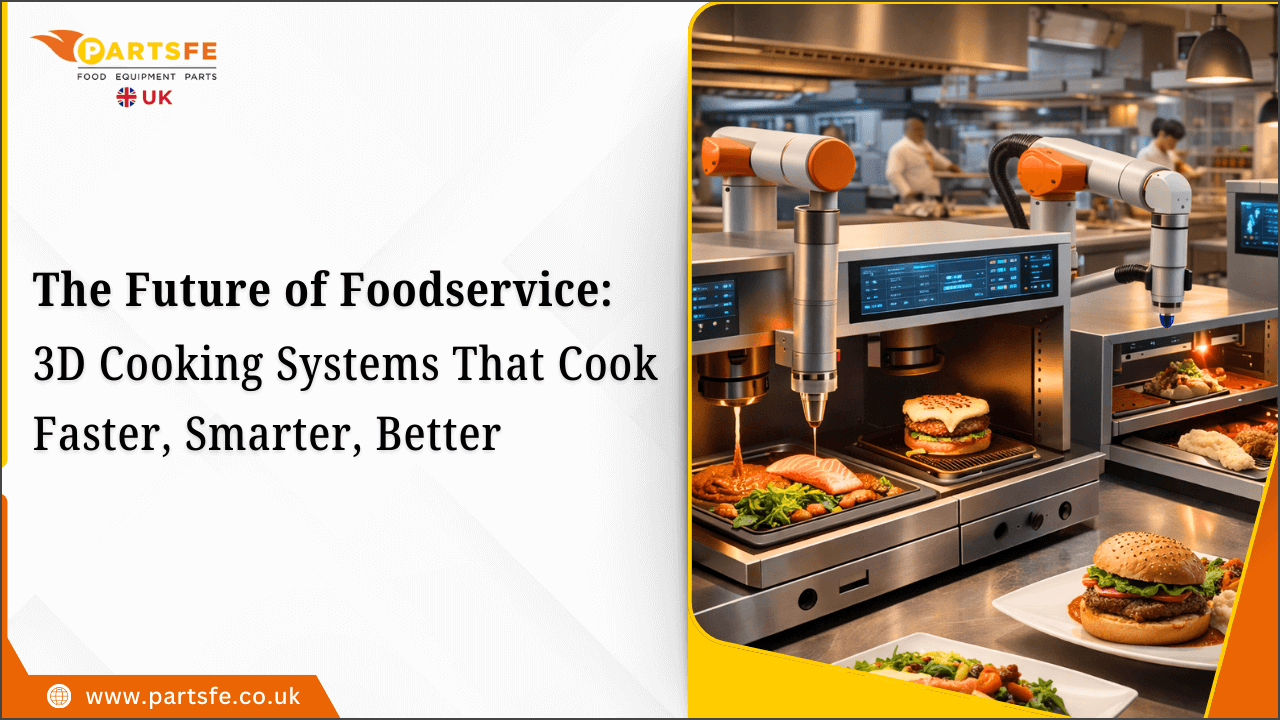
The Future of Foodservice: 3D Cooking Systems That Cook Faster, Smarter, Better
The foodservice industry is evolving rapidly, and 3D cooking systems are at the forefront of this transformation. These advanced technologies combine automation, precision, and smart analytics to deliver faster, consistent, and high-quality meals in commercial kitchens.
By streamlining operations and reducing labor demands, 3D cooking systems are reshaping how chefs and operators approach food preparation. In this article, we explore the key aspects of 3D cooking systems in commercial kitchens, their impact on operations, and the advantages as well as challenges they bring to the foodservice industry.
What Are 3D Cooking Systems?
3D cooking systems are advanced commercial kitchen technologies that combine robotics, precise temperature control, and real-time monitoring to automate cooking tasks. Unlike traditional equipment, they can manage complex sequences such as mixing, heating, and plating with minimal human intervention. Key components of commercial 3D cooking systems often include:
-
Robotic Arms and Automated Dispensers: Precisely handle, measure, and move ingredients, performing tasks like mixing, flipping, and plating to ensure consistent portions and reduce waste.
-
Smart Heating Modules: Maintain exact temperatures and adjust in real time for perfectly cooked dishes every time.
-
Integrated Software Platforms: Allow chefs to schedule, monitor, and control cooking operations remotely, while customizing recipes and managing workflow efficiently.
-
Sensors and AI Analytics: Track cooking performance and ingredient quality, providing insights to minimize waste, optimize processes, and ensure consistent taste and presentation.
The Impact of 3D Cooking Technology on Commercial Foodservice
Automated systems reduce labor-intensive tasks, allow staff to focus on creative and high-value work, and provide valuable data insights for better decision-making. Below are the major ways 3D cooking systems impact commercial foodservice:
-
Consistency and Quality: Maintaining consistent taste, texture, and presentation is challenging in high-volume kitchens, where results often depend on individual chefs’ skills. 3D cooking systems use precise, pre-programmed parameters for every recipe, ensuring each portion meets exact standards.
Example: A commercial pizza kitchen can achieve uniform dough thickness, topping distribution, and baking time for every pie, eliminating human error and improving customer satisfaction.
-
Faster Cooking: Time is critical in commercial kitchens. 3D cooking systems can perform multiple tasks at the same time, such as stirring, heating, and portioning, significantly reducing cooking times and enabling faster service without compromising quality.
-
Streamlined Operations: By automating repetitive, labor-intensive tasks, these systems enable staff to focus on higher-value activities, such as menu development, plating, and customer engagement. This improves overall efficiency and can help reduce labor costs in large-scale operations.
-
Data Insights: Modern 3D cooking systems often include software that collects detailed performance data. Managers can use these insights to optimize inventory, adjust cooking schedules, reduce waste, and enhance profitability, particularly valuable for restaurant chains and large-scale catering services.
How Smart Cooking Systems Optimize Commercial Kitchen Performance
Smart 3D cooking systems boost efficiency by automating tasks, monitoring processes, and integrating with kitchen operations. They help maintain consistency, reduce waste, and save energy. Below are the key ways they optimize performance:
-
Automated Recipes: Chefs can program standardized recipes that control ingredient ratios, cooking times, and temperatures. The system can dynamically adjust for variations in ingredient quality or environmental conditions like humidity or temperature.
-
Real-Time Monitoring: Advanced sensors track cooking parameters continuously and alert staff to potential issues before they affect quality. For instance, if a sauce is nearing the wrong temperature, the system can automatically adjust heat or mixing speed to maintain consistency.
-
System Integration: 3D cooking systems can connect with kitchen management platforms, linking inventory, ordering, and production data. This enables accurate demand forecasting, efficient procurement, and reduced food waste, especially important for large-scale operations.
-
Energy Optimization: Automated systems adjust heat and cooking cycles based on actual needs rather than fixed schedules, reducing energy consumption while maintaining precise cooking conditions and helping control operational costs.
Discover how kitchen design consultants make commercial kitchens more profitable and powerful through smarter layouts, faster workflows, and higher ROI
Advantages and Challenges of 3D Cooking Systems
3D cooking systems offer transformative benefits for commercial kitchens, but operators should carefully consider both advantages and potential challenges before implementation.
Advantages
-
Speed and Efficiency: Automated systems perform multiple tasks simultaneously, stirring, heating, portioning, and plating, which significantly reduces cooking times and eliminates bottlenecks in busy kitchens. This allows restaurants and catering operations to serve more customers during peak hours without sacrificing quality.
-
Consistency: Every dish is prepared to exact specifications, from temperature to portion size, ensuring uniform taste, texture, and presentation. This consistency enhances brand reputation and builds customer trust, particularly for chains and franchise operations.
-
Reduced Labor Dependency: Automation minimizes reliance on highly skilled chefs for routine tasks, allowing staff to focus on creative work such as menu development, plating, and customer service. This can reduce turnover and labor costs over time.
-
Data Insights: Real-time monitoring and analytics track performance, cooking times, and ingredient usage. Managers can use this data to optimize inventory, reduce waste, improve scheduling, and refine recipes based on historical trends.
-
Scalability: 3D cooking systems are ideal for multi-location chains and high-volume catering because they deliver repeatable, reliable performance, ensuring standardized output across all locations.
Challenges
-
High Initial Investment: Advanced 3D cooking systems involve high upfront costs, including hardware, software, and installation, which can be a barrier for smaller kitchens.
-
Staff Training: Employees must be trained to operate, maintain, and troubleshoot these sophisticated systems, which requires time and resources.
-
Integration Complexity: Existing kitchen layouts may need adjustments, such as new electrical setups or workspace redesigns, to accommodate automated systems effectively.
-
Limited Flexibility: While ideal for standardized recipes, highly customized or off-menu requests may require additional programming or manual intervention.
-
Maintenance and Support: These systems require regular cleaning, software updates, and sometimes specialized technical support to maintain peak performance and avoid downtime.
Check out how to set up a functional commercial kitchen: key appliances that ensure efficiency, compliance, and long-term performance
Summary: How 3D Cooking Systems Are Transforming the Future of Foodservice
3D cooking systems are transforming commercial kitchens by combining automation, AI, and smart sensors to deliver faster, consistent, and high-quality meals. They enhance efficiency, reduce labor demands, and provide actionable data insights, helping operators maintain operational excellence while meeting growing customer expectations.
Key Takeaways
-
Automates complex cooking tasks for consistent quality.
-
Reduces labor-intensive processes, allowing staff to focus on creative tasks.
-
Speeds up cooking and service times in high-volume kitchens.
-
Provides real-time monitoring and alerts for better control.
-
Integrates with kitchen management systems to optimize inventory and reduce waste.
-
Lowers energy consumption and operational costs through smart optimization.
Shop now at PartsFe UK to keep your commercial kitchen equipment parts running at peak performance. We offer a wide selection of dishwasher parts, fryer parts, ice machine parts, oven parts, and coffee machine parts to ensure reliable and efficient operation.
References:
https://www.food.gov.uk/research/introduction-3d-printing-technologies-in-the-food-system-for-food-production-and-packaging
https://www.eufic.org/en/newsroom/article/innovative-3d-food-printer-cuts-food-waste-and-boosts-creativity-in-the-kitchen
FAQs
Are 3D cooking systems suitable for small restaurants?
Yes, especially for small restaurants with standardized menus and limited staff. They improve consistency and reduce labor pressure, but operators should evaluate cost, space, and ROI before investing.
How do 3D cooking systems improve food safety compliance?
They maintain precise temperature control and automatically log cooking data. This supports HACCP compliance, reduces human error, and simplifies inspections.
Can 3D cooking systems support menu innovation?
Yes. Programmable recipes allow chefs to test new formulations and cooking methods while ensuring consistent, repeatable results across locations.
|
Disclaimer: This content is for general informational purposes only. Always consult equipment manufacturers or qualified professionals before making purchasing or implementation decisions regarding 3D cooking systems. |


