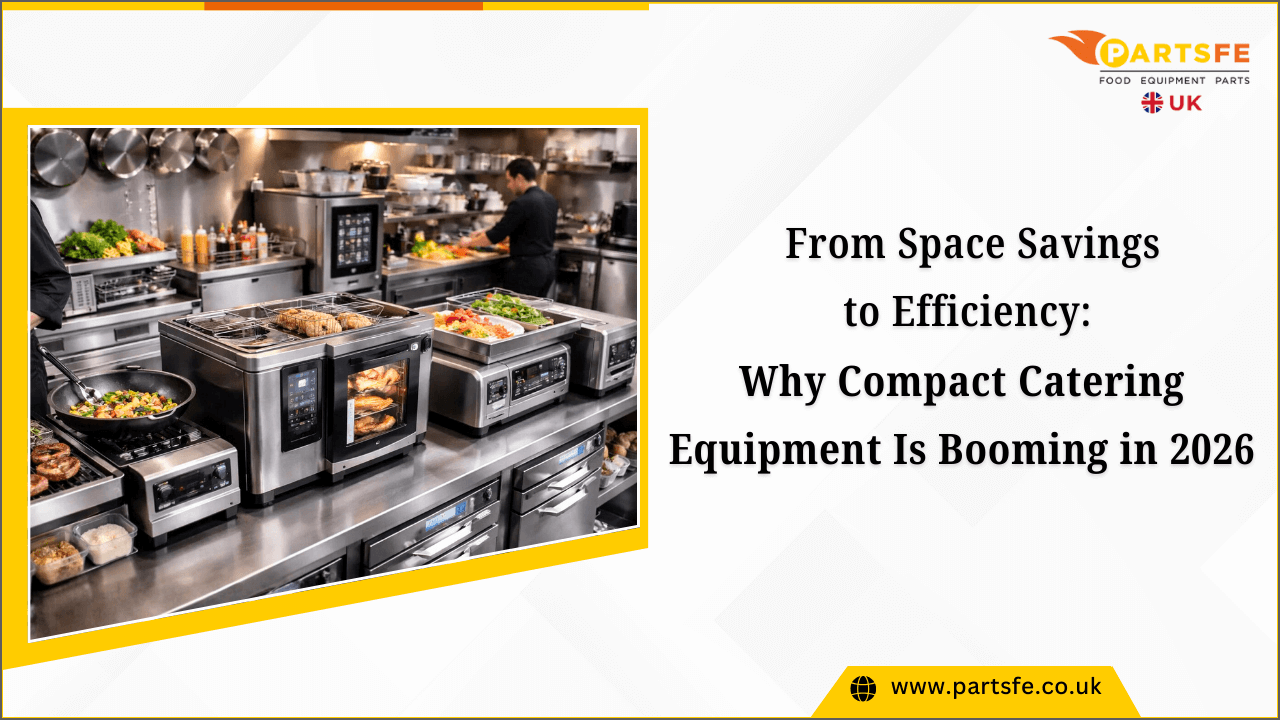
From Space Savings to Efficiency: Why Compact Catering Equipment Is Booming in 2026
The commercial kitchen landscape is evolving rapidly, driven by rising real estate costs, shrinking urban spaces, and a growing focus on sustainability. Restaurant owners, caterers, and foodservice operators are seeking smarter ways to optimize operations, and compact catering equipment has become a key solution. These space-saving appliances deliver high performance without compromising efficiency, transforming kitchens in 2026. This blog explores what compact catering equipment is, its types, why demand is rising, and tips for choosing the right appliances for your kitchen.
What Is Compact Catering Equipment?
Compact catering equipment refers to smaller, versatile kitchen appliances designed to perform the same functions as traditional equipment while occupying less space. Unlike standard kitchen appliances, compact equipment is engineered for efficiency, mobility, and adaptability. This makes it ideal for food trucks, pop-up restaurants, micro-kitchens, and commercial kitchens with limited space. Key characteristics of compact equipment include,
-
Reduced Footprint: Appliances are designed to fit under counters, on countertops, or in multi-use stations.
-
Energy Efficiency: Many compact devices consume less electricity or gas compared to their full-sized counterparts.
-
Mobility and Flexibility: Lighter and often modular, compact equipment can be rearranged or transported easily to suit dynamic kitchen layouts.
-
Durability: Despite their smaller size, most compact appliances are built for commercial-grade performance, ensuring reliability during high-volume operations.
Types of Compact Catering Equipment
Compact catering equipment comes in a variety of forms, each designed to meet specific kitchen needs while saving space and maintaining efficiency. Here’s a detailed look at the most popular types in 2026.
Mini Ovens and Convection Units: Mini ovens, countertop convection ovens, and combi-ovens provide the same functionality as traditional ovens but occupy a much smaller footprint, making them ideal for space-limited kitchens.
-
Features: These ovens heat up quickly, distribute heat evenly for consistent cooking, and often include digital controls for precise temperature management. They are perfect for baking, roasting, or reheating small to medium quantities of food efficiently.
Countertop Fryers and Griddles: Countertop fryers and compact griddles offer high-performance cooking without taking up the space of full-sized units. They are ideal for cafes and restaurants that require fry stations but operate in smaller kitchens.
-
Advantages: These appliances are designed to save energy, are easy to clean, and fit neatly into tight kitchen layouts. Their combination of efficiency and convenience helps kitchens maintain high productivity.
Under-Counter Refrigeration and Freezing Units: Efficient refrigeration is critical in commercial kitchens, particularly when space is limited. Under-counter refrigerators, freezer drawers, and compact blast chillers keep ingredients close to prep stations while maintaining an organized kitchen.
-
Benefits: These units optimize workflow, maintain food safety and quality, and save valuable floor space without compromising storage capacity. Ingredients remain easily accessible, improving both speed and efficiency during food preparation.
Portable Prep Stations and Workstations: Portable prep stations integrate multiple functions, including cutting boards, sinks, and refrigerated drawers, into a single compact unit. They are flexible and adaptable to different kitchen layouts or menu requirements.
-
Features: Their modular design allows easy reconfiguration, supports efficient prep work by keeping tools and ingredients nearby, and is ideal for small kitchens, pop-ups, and catering setups. Compact workstations help chefs maximize productivity while keeping the kitchen organized.
Specialized Compact Equipment: Specialized compact appliances are designed for specific tasks, such as mini dishwashers, countertop steamers, compact pasta cookers, and induction cooktops. These devices address niche needs while conserving space.
-
Advantages: They occupy minimal footprint, meet specialized menu requirements, and enhance overall kitchen efficiency. With these appliances, commercial kitchens can maintain versatility while optimizing workflow.
Why Space Optimization Is Driving Demand in Commercial Kitchens
Space has always been valuable in commercial kitchens, and in 2026, several factors are driving the growing demand for compact catering equipment.
-
Urban Spaces Are Shrinking: With rising property costs and denser cities, restaurants and catering operations are working in smaller kitchens. Compact equipment allows full functionality without expanding the footprint, making it easier to run efficient kitchens in tight urban locations.
-
Cutting Costs and Boosting Efficiency: Commercial kitchens face high utility and labor costs. Smaller, energy-efficient appliances consume less power and water, reducing expenses. They are also quicker to clean, lowering maintenance labor and keeping operations smooth.
-
Sustainability and Compliance: Sustainability is now central to kitchen planning. Compact equipment uses less energy and generates less heat, lowering carbon footprints. It also helps meet growing energy-efficiency regulations while supporting eco-friendly practices.
-
Flexible for Modern Concepts: Ghost kitchens, pop-ups, and hybrid dining models require adaptable equipment. Compact appliances can be easily moved, added, or removed, allowing kitchens to adjust layouts for seasonal menus or changing operational needs.
-
Streamlined Workflow: A well-organized kitchen is a productive one. Compact equipment positions essential appliances closer to prep and cooking areas, reducing unnecessary movement, minimizing errors, and boosting overall efficiency.
Find out how to plan a commercial kitchen that meets every unique business need with key layout and equipment tips for an efficient, compliant setup
How to Choose the Right Compact Equipment for Your Kitchen
Selecting the right compact catering equipment requires balancing space, functionality, durability, and cost. Consider these key factors when making your choice:
-
Assess Your Space: Measure your kitchen and evaluate workflow patterns. Identify underutilized areas where compact equipment can replace larger units. For example, an under-counter refrigerator near a prep station saves steps and improves efficiency.
-
Prioritize Multi-Functionality: Choose appliances that serve multiple purposes. Combi-ovens that bake, steam, and roast, or prep stations with integrated refrigeration, reduce clutter and the need for extra units. Multi-functional equipment delivers better value and saves space.
-
Consider Energy Efficiency: Energy-efficient appliances lower operational costs and support sustainability. Look for digital controls or energy certifications. Even minor reductions in electricity or gas usage can result in significant savings over time.
-
Check Durability: Compact doesn’t mean fragile. Ensure appliances meet commercial-grade standards with stainless steel construction, quality motors, and robust controls. Durable equipment lasts longer and reduces maintenance downtime.
-
Ease of Cleaning: Choose equipment that’s easy to maintain. Features like removable trays, dishwasher-safe parts, and accessible service panels save time, allowing staff to focus on food prep rather than cleaning.
-
Plan for Growth: Select modular, portable, or stackable units that can be reconfigured as your business expands. Versatile equipment ensures your investment remains valuable as your kitchen evolves.
Check out the expert guide: How often to service & maintain commercial catering equipment for recommended service intervals and essential maintenance tips
Summary: Designing Flexible Commercial Kitchens for Long-Term Efficiency
Compact catering equipment is transforming modern kitchens by saving space, improving workflow, and reducing operational costs. Its versatility and energy efficiency make it ideal for small, urban, or multi-concept kitchens. By choosing durable, multi-functional appliances, operators can maximize productivity and adapt to changing needs.
Key Takeaways
-
Compact catering equipment saves space without compromising functionality.
-
Energy-efficient, multi-functional appliances reduce costs and streamline operations.
-
Flexibility and mobility allow kitchens to adapt to changing layouts and menu needs.
-
Durable, commercial-grade construction ensures long-term reliability.
-
Easy-to-clean designs improve workflow and reduce labor time.
-
Choosing scalable, modular equipment prepares kitchens for future growth.
Shop now at PartsFe UK to keep your commercial kitchen equipment parts running at peak performance. We offer a wide selection of dishwasher parts, fryer parts, ice machine parts, oven parts, griddle and grill parts to ensure reliable and efficient operation.
References:
https://www.aeo.org.uk/member-news/-amazing-showa-new-commercial-kitchen-show-hailed-big-success
FAQs
Does compact equipment generate less heat in the kitchen?
In many cases, yes. Energy-efficient compact appliances often produce less ambient heat, helping maintain a more comfortable working environment and reducing strain on ventilation systems.
Is compact catering equipment suitable for start-ups and small businesses?
Yes. Compact equipment is ideal for start-ups, food trucks, cafés, and small restaurants because it reduces upfront space requirements while maintaining professional performance standards.
How can compact equipment improve staff productivity?
By positioning appliances closer to prep and service areas, compact layouts reduce unnecessary movement. This shortens task cycles, improves coordination, and supports faster turnaround during peak hours.
|
Disclaimer: This blog is for general informational purposes only. Equipment specifications and regulations may vary. Always consult manufacturers and qualified technicians before purchasing or servicing commercial catering equipment. |