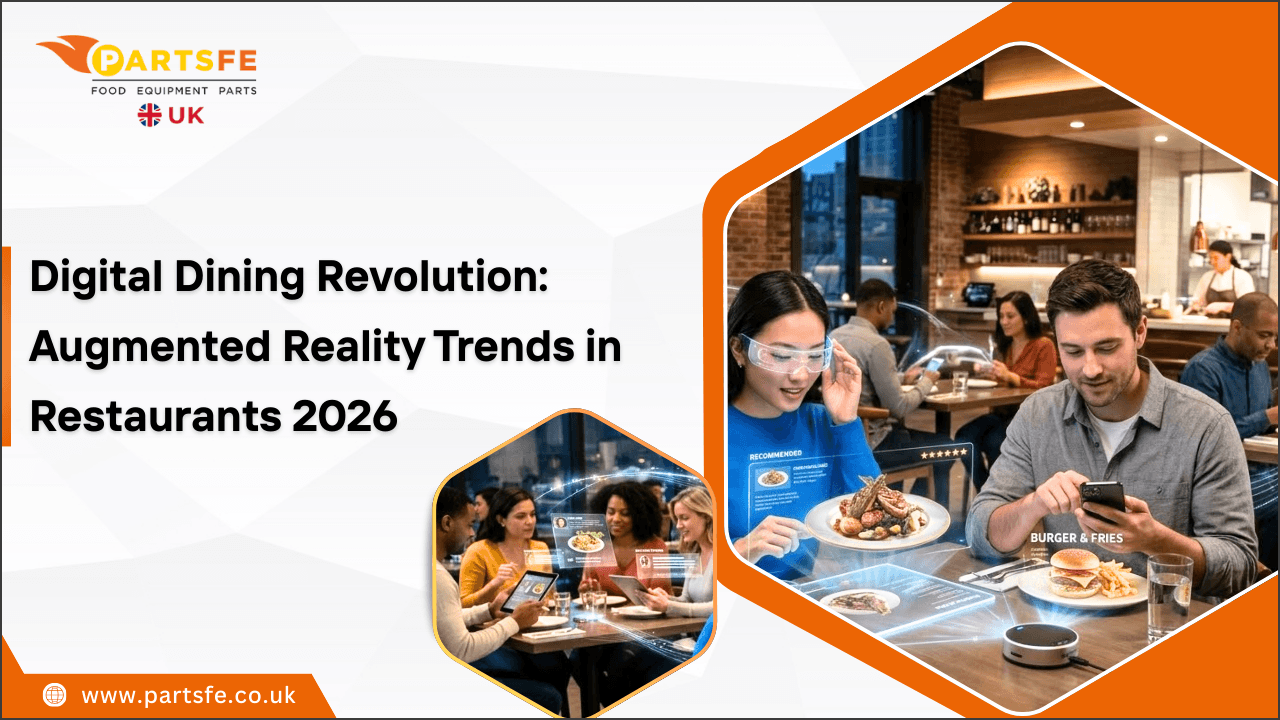
Digital Dining Revolution: Augmented Reality Trends in Restaurants 2026
The restaurant industry is undergoing a profound transformation. As digital technology continues to evolve, augmented reality (AR) is emerging as a key driver of innovation, redefining the way diners interact with menus, chefs, and the dining environment itself.
By 2026, restaurants that integrate AR into their customer experience will not only stand out in a competitive market but also drive engagement, loyalty, and revenue growth. From interactive menus to immersive dining environments, augmented reality is reshaping the very essence of what it means to dine out. In this blog, we explore the latest AR trends set to dominate the restaurant industry, their benefits, and how businesses can leverage them to stay ahead.
| Table of Contents: What is Augmented Reality in Restaurants? Key AR Trends Transforming Dining in 2026 Benefits of Implementing AR in Restaurants How Restaurants Can Prepare for AR Integration |
What is Augmented Reality in Restaurants?
Augmented reality (AR) adds digital elements to the real world, enhancing what diners see and experience. In restaurants, AR can transform the way customers interact with the menu, the space, and even the staff.
Unlike virtual reality, which immerses users in a completely digital environment, AR blends technology with the real world, making it ideal for dining settings. Some common ways restaurants are using AR include:
-
Interactive menus: Diners can scan a QR code or use an AR App to see 3D representations of dishes, including ingredients, portion sizes, and nutritional details.
-
Virtual table settings: AR allows diners to see how different plating styles or table arrangements would look. For example, they could digitally preview a festive table setup or move virtual decorations around before the real items are set.
-
Entertainment overlays: Restaurants can use AR to project animations, stories, or fun visual effects onto the table or dining area. This turns a regular meal into an immersive, interactive experience that entertains guests while they eat.
-
Staff training and support: In the kitchen, AR can guide chefs and staff step by step. For instance, it can show how to assemble a complex dish or the correct portion sizes, helping improve accuracy, reduce mistakes, and speed up service.
According to a Deloitte survey, nearly one-third of diners are more likely to choose premium menu items after viewing them through augmented reality, highlighting significant upsell potential for restaurants.
Key AR Trends Transforming Dining in 2026
Augmented reality is reshaping how restaurants engage customers and operate efficiently. Here are the key trends shaping the digital dining experience:
Interactive AR Menus and Food Visualization: AR menus allow diners to view dishes in 3D before ordering, showing portion size, presentation, ingredients, and allergens. This helps customers make informed choices, increasing satisfaction and reducing food waste.
-
Example: Wahaca, a UK-based Mexican restaurant chain, has implemented AR menus where customers scan a QR code to see animated dish previews on their smartphones.
Immersive Dining Experiences: AR can enhance the dining environment, creating interactive storytelling experiences on tables or walls. Diners may watch virtual chefs, seasonal stories, or animations during their meal, making dining memorable and shareable.
-
Example: London’s Le Petit Chef brings meals to life with table projections, letting diners watch animated stories unfold while enjoying their courses.
AR-Driven Marketing and Loyalty Programs: Restaurants are using AR to boost customer engagement through gamified loyalty programs, interactive receipts, AR filters, and personalized offers, helping drive repeat visits and collect preference data.
Staff Training and Operational Efficiency: AR is also improving operations. Staff can use AR glasses or devices for step-by-step cooking guidance, portion control, and plating techniques, reducing errors, speeding service, and maintaining quality across dishes.
Find out how AI menu planning and automated heat systems elevate chefs’ cooking techniques for smarter, faster, flawless results
Benefits of Implementing AR in Restaurants
Below are the main benefits restaurants can achieve by integrating augmented reality into their dining experience:
-
Enhanced Customer Experience: AR transforms a meal into a multi-sensory experience. Interactive menus, 3D dish presentations, and immersive storytelling engage diners, making visits memorable and encouraging repeat business and recommendations.
-
Increased Revenue Opportunities: By highlighting premium dishes, add-ons, or wine pairings in AR, restaurants can boost upselling. Visual previews entice diners to try more items, increasing average spend per table.
-
Reduced Food Waste: AR menus let diners accurately judge portion sizes and ingredients before ordering. This reduces uneaten food and supports more sustainable operations, a growing priority for restaurants in 2026.
-
Competitive Differentiation: In a crowded market, AR helps restaurants stand out as innovative and customer-focused. Tech-savvy diners are drawn to unique, interactive experiences that go beyond a traditional meal.
How Restaurants Can Prepare for AR Integration
While the benefits of AR are clear, implementation requires planning and strategy. Here’s a roadmap for restaurants aiming to leverage AR technology by 2026:
-
Start with Digital Menus: Implementing AR menus is a low-risk, high-impact starting point. Restaurants can use QR codes or dedicated apps to display 3D dishes, making the technology accessible to diners without major infrastructure changes.
-
Partner with AR Developers: Successful AR experiences require high-quality visuals and smooth interaction. Partnering with experienced AR developers ensures the content is engaging, realistic, and compatible with multiple devices.
-
Train Staff on AR Tools: Staff should be comfortable using AR tools to enhance service quality. Training should cover AR menu navigation, troubleshooting, and best practices for integrating technology into daily operations.
-
Measure and Optimize: Like any technology investment, AR requires data-driven optimization. Track metrics such as customer engagement, menu interactions, sales uplift, and social media shares. Use this data to refine the experience and maximize ROI.
-
Plan for Marketing Integration: AR works best when paired with marketing campaigns. Promote AR features via social media, loyalty programs, and in-restaurant signage to encourage adoption and build excitement.
Summary: Embracing the AR Dining Revolution
Augmented reality is redefining the restaurant experience, turning meals into immersive, interactive events. By 2026, AR will be a key differentiator for restaurants, enhancing customer engagement, boosting revenue, and streamlining operations. Early adoption and strategic implementation will position restaurants as innovative leaders in a competitive market.
Key Takeaways:
-
AR enhances customer engagement through interactive menus and immersive experiences.
-
Digital 3D menus help diners make informed choices and reduce food waste.
-
AR-driven marketing and loyalty programs increase retention and brand visibility.
-
Staff training with AR tools improves efficiency and consistency in service.
-
Implementing AR boosts upselling and revenue opportunities.
-
Early adoption positions restaurants as innovative and customer-centric in a competitive market.
Shop now at PartsFe UK to keep your commercial kitchen equipment parts running at peak performance. We offer a wide selection of dishwasher parts, fryer parts, griddle and grill parts, ice machine parts, and oven parts, helping you maintain efficiency in your kitchen operations.
References:
https://restaurant.org/education-and-resources/resource-library/restaurant-tech-that-delights-your-customers/
https://news.wsu.edu/press-release/2026/02/18/augmented-reality-menus-may-help-restaurants-attract-customers/
FAQs
What is the 3-minute rule in restaurants?
The 3-minute rule is a service standard where staff must acknowledge or serve guests within three minutes of arrival. This includes greeting, offering menus, or taking initial orders. It improves service efficiency, reduces perceived wait time, and increases customer satisfaction.
Can AR content be updated easily?
Yes, AR content is designed for easy updates. Most systems use a cloud-based dashboard where restaurants can quickly modify menu items, prices, or 3D visuals. Updates are reflected instantly when customers access the AR menu, making it ideal for dynamic menus.
Is AR technology expensive for restaurants?
AR costs vary based on complexity. Entry-level solutions are relatively affordable and work on subscription models, while advanced AR systems with custom 3D assets and integrations require higher investment.
|
Disclaimer: This content is for informational purposes only, and results may vary by restaurant or AR system. Always consult a professional before implementing AR solutions. |