The Tech-Driven Future 2026 AI, Data Analytics, and Hyper-Personalization Shaping UK Hospitality
The UK hospitality industry is undergoing a rapid transformation as technology reshapes guest experiences and operational efficiency. Artificial intelligence, data analytics, internet of things devices, and smart automation are no longer optional; they are becoming essential tools for hotels, restaurants, pubs, and resorts. From hyper-personalized stays to predictive operations, technology enables businesses to anticipate guest needs, optimize workflows, and boost revenue. By 2026, tech-driven strategies will define competitiveness in the sector. This article explores how AI and analytics are revolutionizing UK hospitality, highlights real-world examples, and provides actionable insights for operators preparing for a connected, data-powered future.
How AI and Data Analytics Are Powering Hyper-Personalized Guest Experiences
Hyper-personalization is no longer a competitive advantage; it is an expectation. Modern travellers want experiences that are tailored to their preferences, anticipate their needs, and make their stay effortless. AI and data analytics allow hospitality providers to deliver precisely that, using information from booking history, social media behaviour, and in-stay preferences.
Real-World Application: AI Concierge in Hotels
Many hotel groups in the UK are introducing AI-based digital concierges accessible via websites and messaging platforms to improve guest interactions and reduce operational strain. These systems can handle routine inquiries, provide recommendations, and suggest room upgrades or additional services. By automating repetitive tasks, AI allows staff to focus on more meaningful guest interactions while maintaining a personalised experience. This approach shows how technology can enhance guest satisfaction, generate additional revenue, and streamline operations.
Key AI & Data Analytics Applications in Hospitality
By integrating AI-driven systems with the human touch, hotels can offer predictive, on-demand, and highly customized stays, improving both guest satisfaction and loyalty.
Refer to the table below for applications, use cases, and their benefits, and see how AI and data analytics are transforming hospitality.
|
Application |
Use Case |
Impact |
|
AI Chatbots & Virtual Assistants |
Handle bookings, answer FAQs, and upsell services 24/7 |
Frees staff for higher-value tasks; ensures instant guest response |
|
Data-Driven Recommendations |
Segment guests by type (business, leisure, family, solo) and suggest room types, meals, or amenities |
Enhances guest satisfaction and loyalty |
|
Targeted Marketing & Promotions |
Analyse browsing and booking data to send tailored campaigns |
Boosts engagement, increases upsell revenue, and strengthens customer retention |
|
Voice & Smart Assistant Integration |
Control lighting, temperature, and entertainment via voice |
Enhances convenience, comfort, and data collection for personalization |
Find out how to improve your commercial kitchen for happier employees by boosting efficiency, safety, and staff satisfaction
The Impact of Emerging Technologies Across UK Hospitality Segments
Technology adoption in the UK hospitality sector is no longer limited to large hotel chains. Hotels, restaurants, pubs, and experiential venues are leveraging AI, IoT, and smart systems to improve efficiency, reduce costs, and deliver personalised guest experiences.
Hotels & Lodging
Hotels are implementing contactless check-ins, digital room keys, and IoT-enabled rooms that automatically adjust lighting, temperature, and in-room entertainment based on individual guest preferences. AI-powered platforms optimise housekeeping schedules, forecast demand, and support dynamic pricing, helping hotels maintain efficiency while remaining competitive.
Scenario: A returning guest enters a room already configured to their preferred lighting and temperature settings. At the same time, housekeeping schedules have been optimised based on occupancy, and room rates reflect real-time market demand.
Restaurants & Bars
Digital ordering through table-side tablets or QR codes reduces wait times and minimizes ordering errors. Smart kitchen equipment and robotic bartenders improve consistency and speed, while AI-driven workforce scheduling ensures the right staff levels during peak periods. Voice-activated reservation systems provide 24/7 booking support without adding pressure on front-of-house teams.
Scenario: On a busy Friday evening, diners place customised orders via their smartphones, allowing staff to focus on attentive service and recommendations, resulting in faster turnaround times and improved customer satisfaction.
Pubs & Clubs
IoT-enabled tables and smart taps allow guests to order and pay seamlessly, while real-time inventory monitoring helps prevent stock shortages and waste. AI-powered marketing tools and digital loyalty programmes enable pubs and clubs to better understand customer preferences and encourage repeat visits.
Scenario: A pub-goer orders and pays for their favourite drink through a smart table, while staff concentrate on creating a vibrant, social atmosphere rather than processing transactions.
Experiential & Tourism Venues
Augmented and virtual reality technologies are enhancing visitor engagement in museums, attractions, and cruise experiences by offering immersive and interactive content. AI-powered itinerary planning tools help guests personalise activities, reduce waiting times, and maximise their overall experience.
Scenario: An event planner uses a VR walkthrough to assess a venue remotely before booking, while resort guests receive AI-curated activity suggestions tailored to their interests and schedule.
Smart Solutions for Streamlined and Efficient Hospitality Management
Smart technology helps hospitality businesses manage daily operations more efficiently. The image below highlights key solutions across staffing, energy management, housekeeping, and guest services, showing their impact on efficiency, cost reduction, and guest experience.
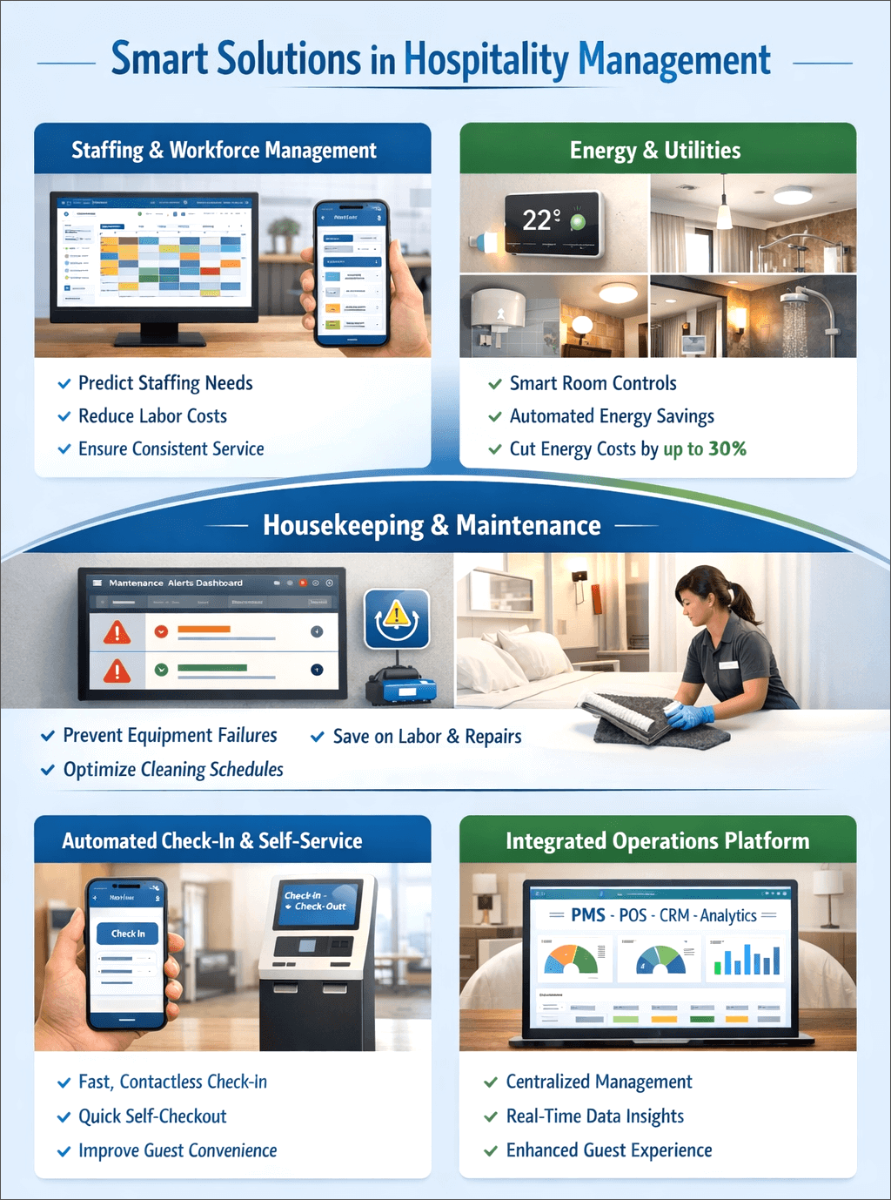
Explore the future of hospitality robot bartenders, automated check-ins, and personalized tech, showcasing how AI is reshaping guest experiences
Preparing UK Hospitality Businesses for a Tech-Driven 2026
To stay competitive as technology advances, UK hospitality businesses need to prepare for digital change. The points below explain simple and practical steps to get ready for a tech-driven future in 2026.
-
Invest in Skills and Training: Programs like UKHospitality’s SWAP initiative train staff in AI, digital tools, and smart operations. Staff trained in technology can fine-tune guest interactions, enhancing the human touch in automated processes.
-
Start Small and Demonstrate ROI: Pilot projects, such as chatbots or digital ordering systems, allow operators to measure impact on revenue, bookings, and guest satisfaction before scaling. This approach reduces risk and builds internal buy-in.
-
Collaborate and Network: Participation in expos like Hospitality Tech360, partnerships with technology vendors, and engagement with innovation grants support informed adoption and access to cutting-edge tools.
-
Plan for Change Management: Engage staff early, redesign workflows, and maintain hybrid models to accommodate diverse guest preferences. For example, offering both kiosks and app-based check-in ensures comfort for all guests.
-
Ensure Security & Compliance: GDPR and robust cybersecurity protocols are essential for protecting guest data, building trust, and sustaining long-term technology adoption.
Conclusion: Embracing Technology to Shape the Future of UK Hospitality
The UK hospitality sector is entering a transformative era where AI, data analytics, and smart technologies are essential for seamless, personalized guest experiences and operational efficiency. Hotels, restaurants, pubs, and experiential venues use technology to anticipate needs, optimize workflows, and boost revenue. By combining hyper-personalization, predictive management, and smart automation with trained staff, operators can enhance satisfaction, loyalty, and profitability, while delivering the connected, tailored experiences that modern guests expect.
Key Takeaways:
-
AI and data analytics enable hyper-personalized guest experiences.
-
IoT and smart systems improve operational efficiency across hotels, restaurants, and pubs.
-
AI-driven automation frees staff for meaningful interactions.
-
Pilot projects help measure ROI before scaling technology adoption.
-
Staff training and digital skills are essential for successful tech integration.
-
Security, compliance, and guest data protection are critical for trust and sustainability.
Summary:
AI, data analytics, and smart technologies are revolutionizing UK hospitality. Hotels, restaurants, pubs, and venues are using these tools to personalize guest experiences, streamline operations, and increase revenue. By combining technology with skilled staff, businesses enhance satisfaction, loyalty, and efficiency, staying competitive in an increasingly connected, tech-driven landscape.
Shop premium commercial kitchen replacement parts at PartsFe UK, your trusted source for reliable and durable components. We stock high-quality dishwasher, fryer, griddle and grill, ice machine, and oven parts designed to keep your equipment performing at its best. With genuine parts for leading brands like Blodgett, Hatco, and Vulcan Hart, PartsFe UK helps extend equipment lifespan and maintain consistent, efficient kitchen operations.
References:
https://www.ukhospitality.org.uk/the-future-of-hospitality-navigating-a-dichotomised-landscape/
https://www.hospitalitynet.org/opinion/4130128.html
FAQs
How can small hospitality businesses adopt technology cost-effectively?
Small operators can start with pilot projects like digital ordering, online booking systems, or simple AI chatbots. Gradual adoption, staff training, and choosing scalable solutions help improve efficiency and guest experiences without high upfront costs.
What are the 3 C’s of hospitality?
The three C’s of hospitality are Customer, Comfort, and Care. Together, they ensure guests feel welcomed, valued, and well looked after throughout their experience.
What is the biggest challenge in hospitality?
The biggest challenge is delivering consistent service quality while managing staffing and rising operational costs.
Why is data security important in technology-driven hospitality?
Hospitality businesses handle large volumes of guest data, including personal and payment information. Strong data security and GDPR compliance protect guest trust, prevent breaches, and support long-term adoption of digital technologies.