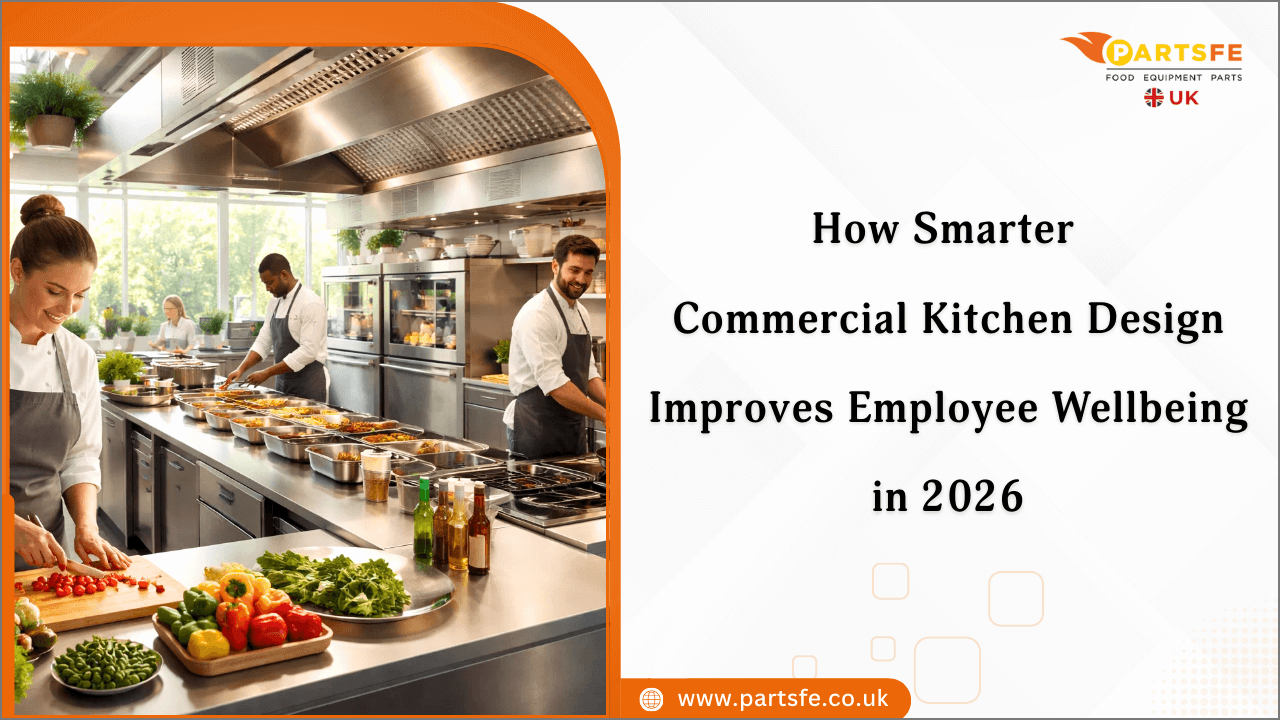
How Smarter Commercial Kitchen Design Improves Employee Wellbeing in 2026
In 2026, commercial kitchen design is shifting from purely efficiency-focused layouts to prioritizing employee health and well-being. Modern kitchens use data-driven layouts, ergonomic workstations, and smart automation to reduce fatigue, prevent injuries, and improve workflow. Optimized lighting, air quality, and acoustics further support staff comfort and focus. In this article, we explore how smarter kitchen design enhances employee well-being, increases morale, and drives better overall performance in fast-paced culinary environments.
Why Employee Wellbeing Is Now a Core Metric in Commercial Kitchen Design
Commercial kitchens prioritized throughput, speed, and space efficiency. While these elements remain critical, there is growing recognition that employee well-being is directly tied to business outcomes and long-term employee wellbeing strategy goals. Fatigue, repetitive strain injuries, and stress can lead to costly mistakes, reduced productivity, and high staff turnover. Several industry trends influence the push toward prioritizing human factors:
-
Labor Shortages and Retention Challenges: The hospitality industry faces ongoing labor shortages, making it essential to retain skilled staff. A well-designed kitchen signals that employers value their workforce, improving morale and loyalty.
-
Occupational Health Awareness: Workers are more aware of their rights and health risks, demanding workplaces that prioritize their physical and mental health. A kitchen with excessive heat, poor ventilation, or poorly arranged equipment can lead to chronic health issues and burnout.
-
Regulatory and Sustainability Pressures: Many regions now integrate employee well-being metrics into health, safety, and sustainability standards. Ergonomic design, air quality management, and thermal comfort are no longer optional; they’re often mandated.
By making employee wellbeing a design metric, commercial kitchens align operational efficiency with human-centric values, creating workplaces where staff can thrive physically and mentally.
|
Note: According to recent studies, commercial kitchens with ergonomically optimized layouts and supportive environments see up to a 25% reduction in injury claims and a 15% increase in staff retention. |
Keep your commercial kitchen running smoothly with replacement parts from PartsFe UK. We supply catering kitchen equipment spares, including high-quality dishwasher parts, fryer parts, ice machine parts, and oven parts, all designed for durability and professional performance.
Data-Driven Layouts That Reduce Fatigue and Improve Daily Workflows
One of the most effective ways to support employee wellbeing is through intelligent, data-driven kitchen layouts. In modern commercial catering kitchen design, ergonomics and workflow analytics help minimize fatigue, reduce injury risk, and improve daily operational efficiency.
Key Principles of Data-Driven Kitchen Layouts: Below are the key principles that guide data-driven kitchen layouts, focusing on efficiency, ergonomics, and optimized workflow to reduce staff strain and improve productivity.
-
Work Triangle Optimization: The traditional stove–sink–refrigerator triangle is adapted for multi-station kitchens, placing work areas closer together to reduce unnecessary movement and repetitive strain.
-
Zoning for Task Efficiency: Data analysis identifies high-traffic areas and bottlenecks, allowing designers to separate hot and cold zones and position storage within easy reach, reducing congestion and accidents.
-
Height-Adjustable Workstations: Adjustable counters and prep tables accommodate different staff heights, helping prevent back, shoulder, and wrist strain during long shifts.
-
Flow Mapping Using Technology: Sensors and workflow software track movement patterns and task sequences, enabling layout adjustments that improve efficiency. Some kitchens report up to a 20% increase in throughput after optimization.
-
Ergonomic Enhancements: Anti-fatigue mats, cushioned flooring, automated lifts, and centrally positioned prep stations reduce physical strain and support smoother daily workflows.
Smart Catering Kitchen Equipment and Automation Supporting Safer, Healthier Teams
Technology and automation are transforming commercial kitchens, making them safer, healthier, and more efficient for employees. Modern smart equipment reduces physical strain, minimizes repetitive tasks, and automates high-risk processes, allowing staff to focus on creative and high-value work instead of exhausting manual labor. Below are some examples of how smart kitchen tools and automation support safer, healthier teams:
-
Automated Prep Machines: High-capacity vegetable choppers, dough mixers, and portioning machines handle repetitive prep tasks, reducing the risk of injuries such as tendonitis or carpal tunnel syndrome.
-
Intelligent Cooking Systems: Smart ovens, combi-ovens, and induction cooktops offer precise temperature control, automated cooking cycles, and alerts when food is ready. This minimizes the risk of burns, prevents overcooking, and allows staff to multitask safely.
-
Robotics and Automated Helpers: Robotic fryers and AI-assisted kitchen arms take over physically demanding or high-risk tasks, such as deep-frying and heavy lifting, reducing strain and exposure to hazards while maintaining service efficiency.
-
Ergonomic Dishwashing Solutions: Conveyor dishwashers, height-adjustable sinks, and automated sanitizing units limit heavy lifting and prolonged bending, protecting employees from back strain and repetitive stress injuries.
-
Wearable and Sensor-Based Safety Tools: Wearable devices and environmental sensors monitor staff posture, movement, and heat exposure, providing real-time alerts to prevent accidents before they occur.
-
Inventory and Workflow Automation: Automated stock management, prep tracking, and ordering systems reduce mental fatigue and stress from supply errors, allowing employees to focus on cooking and service.
Explore why every commercial kitchen needs a powerful prep table setup to boost efficiency, streamline workflows, and support staff wellbeing
Environmental Design: Air Quality, Lighting, Acoustics, and Thermal Comfort
The physical environment of a kitchen plays a critical role in employee well-being. Designers now pay close attention to air quality, lighting, noise, and temperature to ensure staff remain healthy and alert. Refer to the image below for a visual overview of how air quality, lighting, acoustics, and thermal comfort are optimized in modern commercial kitchen environments.
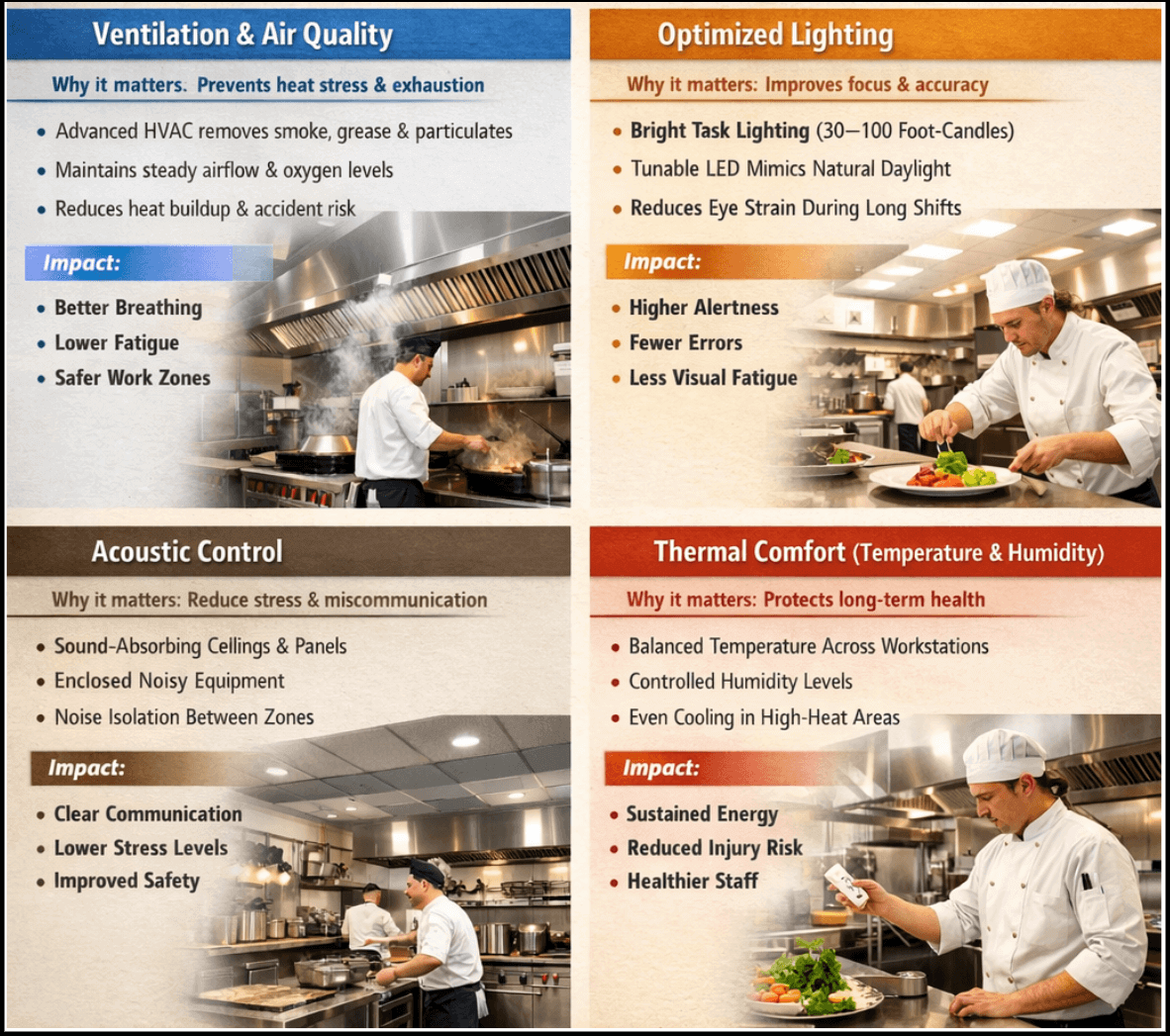
By designing the environment to support human performance, commercial kitchens ensure that staff can operate safely, remain focused, and maintain energy throughout long shifts.
|
Maintenance Tip: Regularly service HVAC and lighting systems to maintain clean air, comfortable temperatures, and consistent visibility, ensuring a safe, focused, and energy-efficient kitchen environment for staff. |
Check out commercial kitchen inspections: A quick way to secure compliance and success, to understand how inspections support safety and compliance
Summary: Future-Proofing Commercial Kitchens Around Human Performance
Smarter commercial kitchen design in 2026 prioritizes employee well-being alongside efficiency. Ergonomic layouts, smart automation, and optimized environmental factors reduce fatigue, prevent injuries, and boost morale. By integrating data-driven planning, advanced equipment, and supportive workplace conditions, kitchens become safer, healthier, and more productive spaces for staff.
Key Takeaways:
-
Ergonomic layouts and adjustable workstations reduce strain and fatigue.
-
Data-driven flow and zoning optimize task efficiency and minimize congestion.
-
Smart kitchen equipment and automation limit repetitive tasks and hazards.
-
Proper ventilation, lighting, acoustics, and temperature improve comfort and alertness.
-
Wearable and sensor technologies enhance safety and prevent accidents.
-
Prioritizing employee well-being drives higher retention, productivity, and morale.
References:
https://triline.co.uk/boosting-kitchen-productivity-with-ergonomic-design
https://www.restauranttimes.com
FAQs
What design features reduce stress and fatigue for kitchen staff?
Ergonomic workstations, adjustable counters, anti-fatigue mats, optimized workflow layouts, proper lighting, ventilation, and noise control all help reduce stress and physical strain.
Are ergonomic upgrades worth the investment for commercial kitchens?
Yes. Ergonomic upgrades lower injury risk, boost productivity, improve morale, and reduce staff turnover, offering long-term operational and financial benefits.
What are the biggest kitchen design trends for employee wellbeing in 2026?
Key trends include data-driven layouts, smart automation, ergonomic workstations, climate-controlled environments, and sensor-based safety tools to enhance comfort, efficiency, and staff health.