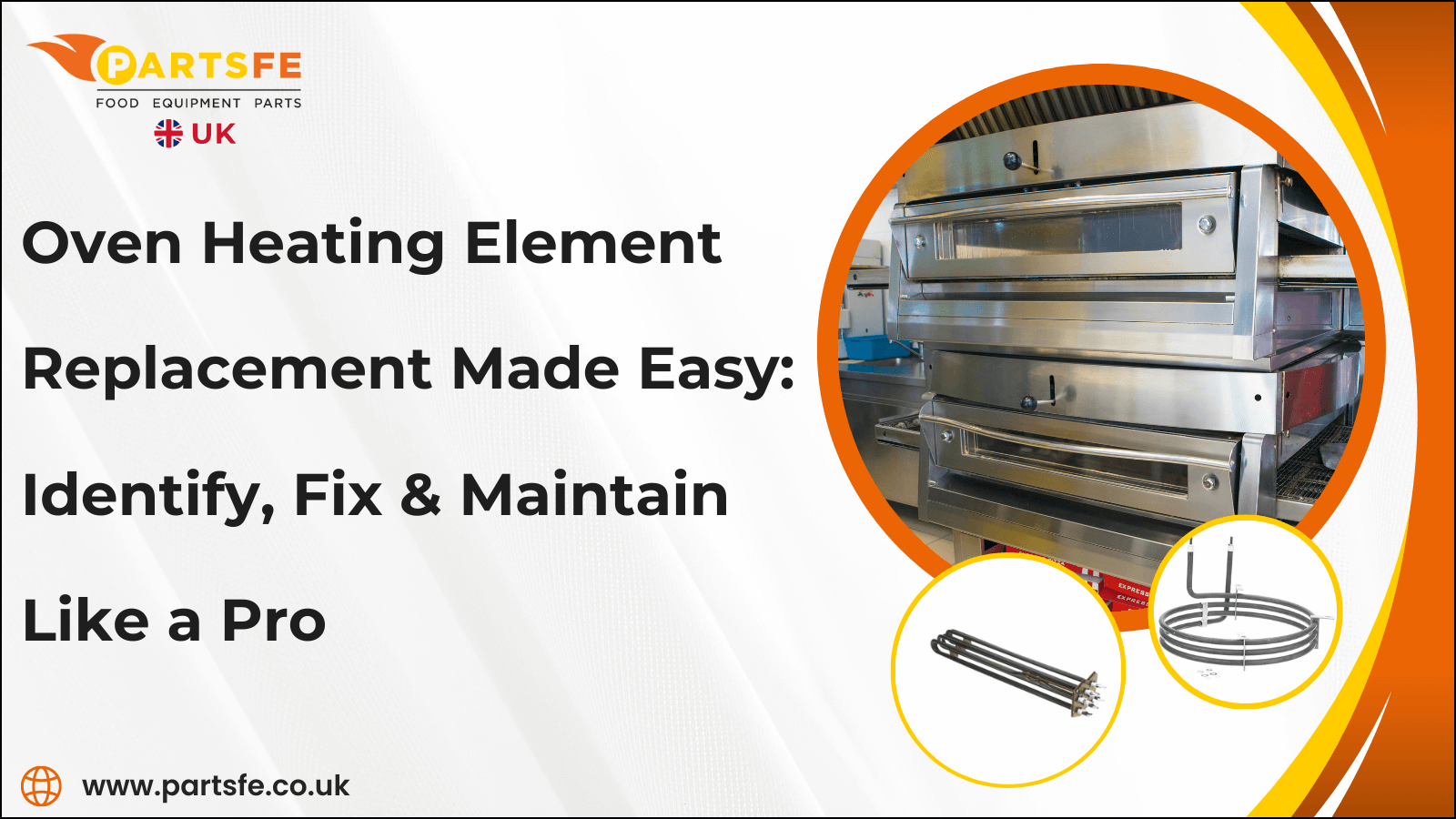
Oven Heating Element Replacement Made Easy: Identify, Fix & Maintain Like a Pro
A faulty oven heating element doesn’t have to spell the end of cooked meals. In many UK commercial kitchens, this is a common issue that can be easily repaired with the right guidance. Understanding oven heating element replacement not only saves money but also ensures your appliance performs at its best for years.
This guide explains how to identify when a heating element oven not working issue arises, how to replace a heating element in an oven safely, and how to maintain it effectively. You’ll also find UK-specific cost insights and real-world experiences from users who’ve handled these repairs themselves. Whether you own an Electrolux, Beko, Bosch, or Smeg oven, learning these simple steps can help you keep your appliance running efficiently and avoid unnecessary repair bills.
Why Oven Heating Elements Matter in Every Kitchen
In every commercial kitchen, the oven plays a vital role in preparing roasts, casseroles, and baked goods. When the heating element fails, your meals cook unevenly or not at all. The oven heating element is responsible for generating and maintaining consistent temperatures, ensuring that heat is evenly distributed inside the cavity.
-
Without a functional element, food may remain undercooked in the middle or burn on the outside. Moreover, an inconsistent temperature can affect food safety, particularly when cooking meat or poultry. The heating element’s reliability directly impacts the taste, texture, and safety of your meals.
-
To maintain kitchen efficiency, regular inspections and timely oven heating element replacement are essential. By keeping an eye out for early warning signs, kitchen owners can prevent full oven failure and costly service calls.
Understanding Oven Heating Elements and Their Core Functions
Before you rush to replace your element, it’s important to understand how it functions and what causes it to fail. Oven heating elements are typically metal coils made from nickel-chromium alloys designed to convert electrical energy into heat through resistance.
Ovens often include two or more elements:
-
Bottom bake element for primary heat during baking.
-
Top grill element for browning or grilling.
-
Circular fan element in convection models for even air circulation.
Over time, exposure to extreme heat cycles can lead to cracking, blistering, or electrical burnout. Power surges, frequent self-cleaning cycles, or corrosion from spills can also shorten an element’s lifespan. Recognising these issues early helps you avoid sudden oven breakdowns.
Common Types of Oven Heating Elements Explained
Every oven model is designed differently, and so are its heating elements. Understanding the type installed in your oven helps you order the correct replacement part.
Here are the primary configurations commonly used:
-
Hidden bake elements: Concealed under the oven floor for a sleek look and easy cleaning. Ideal for modern designs like Neff or AEG.
-
Exposed bake/grill elements: Visible coils at the top and bottom, common in traditional electric ovens.
-
Fan oven elements: Circular or serpentine-shaped elements positioned around the fan to distribute heat evenly.
-
Radiant/broil elements: Found in ceramic/glass cooktops or ovens. Uses electric coils under a flat surface for quick, even heat. Oven broil elements are great for baking and broiling and are easy to clean.
Knowing where the heating element is located, either at the top or bottom, simplifies the replacement process. Most models are built for easy access, making DIY repair a feasible option for many users.
Symptoms of a Faulty Oven Heating Element
If your oven takes longer than usual to heat or food cooks inconsistently, it may be time to check your heating element. Common warning signs include:
-
No red glow when the oven is switched on.
-
Uneven cooking, some parts of the food are burnt while others remain raw.
-
Visible damage, such as cracks, burns, or bulges, on the element.
-
Slow heating or complete failure to reach the set temperature.
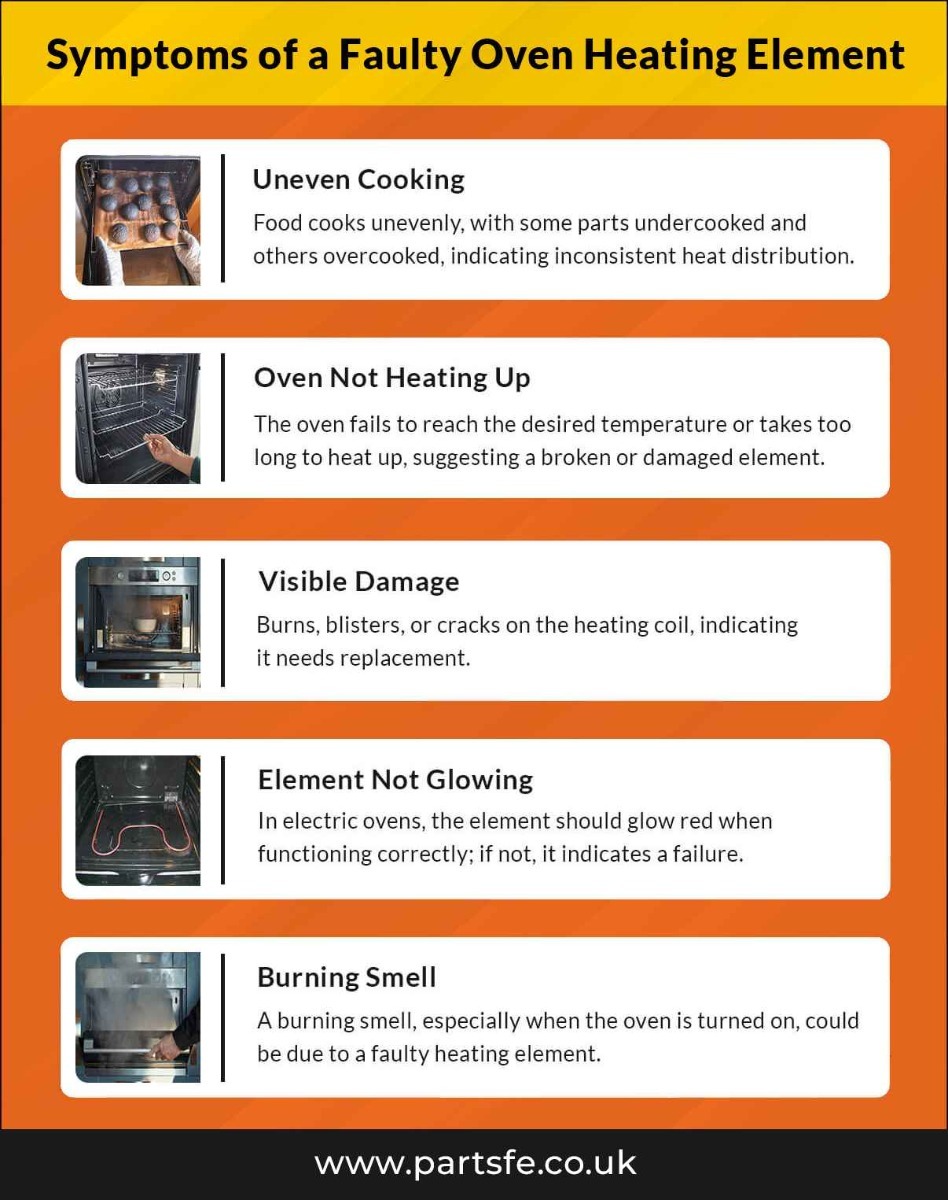
Before assuming the worst, check your power supply, fuse, and thermostat. If everything else functions properly, your heating element oven not working issue likely means the element has failed.
Step-by-Step Process: How to Replace Heating Element in Oven Safely
Once you’ve confirmed a failure, replacing the heating element is straightforward if done safely. Always ensure the oven is disconnected from the main supply before starting.
-
Unplug or isolate power: Turn off the electricity at the wall or fuse box.
-
Locate the faulty element: Refer to your manual to confirm whether it’s at the top, bottom, or behind the fan.
-
Remove racks and screws: Unscrew any brackets or mounts securing the element in place.
-
Disconnect wiring: Gently pull off electrical connectors—take a photo reference for reassembly.
-
Install the new element: Attach the new connectors, secure the new oven element with screws, and ensure tight contact.
-
Restore power and test: Plug the oven back in and turn it on to confirm heating functionality.
-
Safety Note: If you feel unsure at any stage, consult a qualified electrician. Working with mains electricity carries serious risks.
Troubleshooting Common Oven Element Issues After Replacement
Sometimes, even after installing a new oven element, performance issues may persist. Here’s what to look for:
-
Oven not heating: Check for loose or improperly connected wires.
-
Fuse tripping: A wire may be shorting against the oven’s metal body.
-
Uneven heating: Ensure the replacement element’s wattage matches your original model.
-
Display not responding: Re-inspect connections to the control panel.
Persistent problems may indicate issues beyond the heating element, such as a faulty thermostat, control board, or thermal fuse. If these are suspected, a professional diagnosis is recommended.
Explore the common Commercial Oven Thermostat Issues: A Guide to How to Troubleshoot Them for Smoother Kitchen Operations
Preventive Maintenance Tips for Long-Lasting Oven Performance
Proper maintenance can significantly extend the lifespan of your electric oven heating element. Here are simple yet effective ways to protect it:
|
Maintenance Tip |
Description |
|
Clean spills immediately |
|
|
Inspect annually |
|
|
Avoid using the oven as a heater |
|
|
Limit self-cleaning cycles |
|
|
Choose genuine spare parts |
|
Cost Overview: How Much Does It Take to Replace an Oven Heating Element?
Replacing an oven element in the UK is generally cost-effective, especially compared to buying a new appliance. Below is an overview of average costs:
|
Oven Brand/Type |
Average Cost (Element Only) |
Average Fitted Cost |
|
Standard electric oven |
£20–£45 |
£60–£120 |
|
Branded (Electrolux, Bosch) |
£25–£60 |
£80–£150 |
|
Fan oven element |
£25–£75 |
£90–£160 |
DIY replacement saves significantly on labour, which typically ranges between £45 and £100, depending on region and service urgency.
Tips:
-
Compare the cost to replace heating element in oven against buying a new model, repairs are usually much cheaper.
-
Keep warranty paperwork; many elements fail within covered periods.
-
By budgeting sensibly, you can extend your oven’s service life without unnecessary expense.
Refer to our Ultimate Guide to Commercial Oven Error Codes and Solutions
Maintain Your Oven Performing at Its Best
A faulty oven heating element doesn’t have to interrupt daily cooking. With the right approach, replacing an electric oven heating element is a manageable task.
-
Regular cleaning, periodic inspections, and the use of genuine spares help maintain consistent heating and extend the appliance’s lifespan.
-
While most oven heating issues stem from a damaged element that can be replaced affordably, those uncertain about electrical repairs should consider hiring a qualified technician.
Timely replacement keeps the oven efficient, reliable, and ready to deliver perfectly cooked meals, saving both time and money in the long run. PartsFe UK offers a wide range of commercial oven spare parts, including ignitors, broiler elements, door gaskets, heating elements, knobs, light bulbs, pilot lights, racks, thermostats, and toaster elements from renowned manufacturers at competitive prices.
FAQs
How long does it take to change a heating element in an oven?
Replacing a heating element in an oven usually takes about 30 to 60 minutes, depending on the oven model and accessibility of the part.
What is the lifespan of an oven element?
The oven heating element lifespan typically ranges from 8 to 12 years, depending on usage and maintenance.